Best Fire Extinguisher for Boat & Marine Use (2026)
Fuel vapour in the bilge, galley grease fires, lithium battery banks, saltwater corrosion on every metal surface. A boat fire at sea has no exit \u2014 and no fire department.
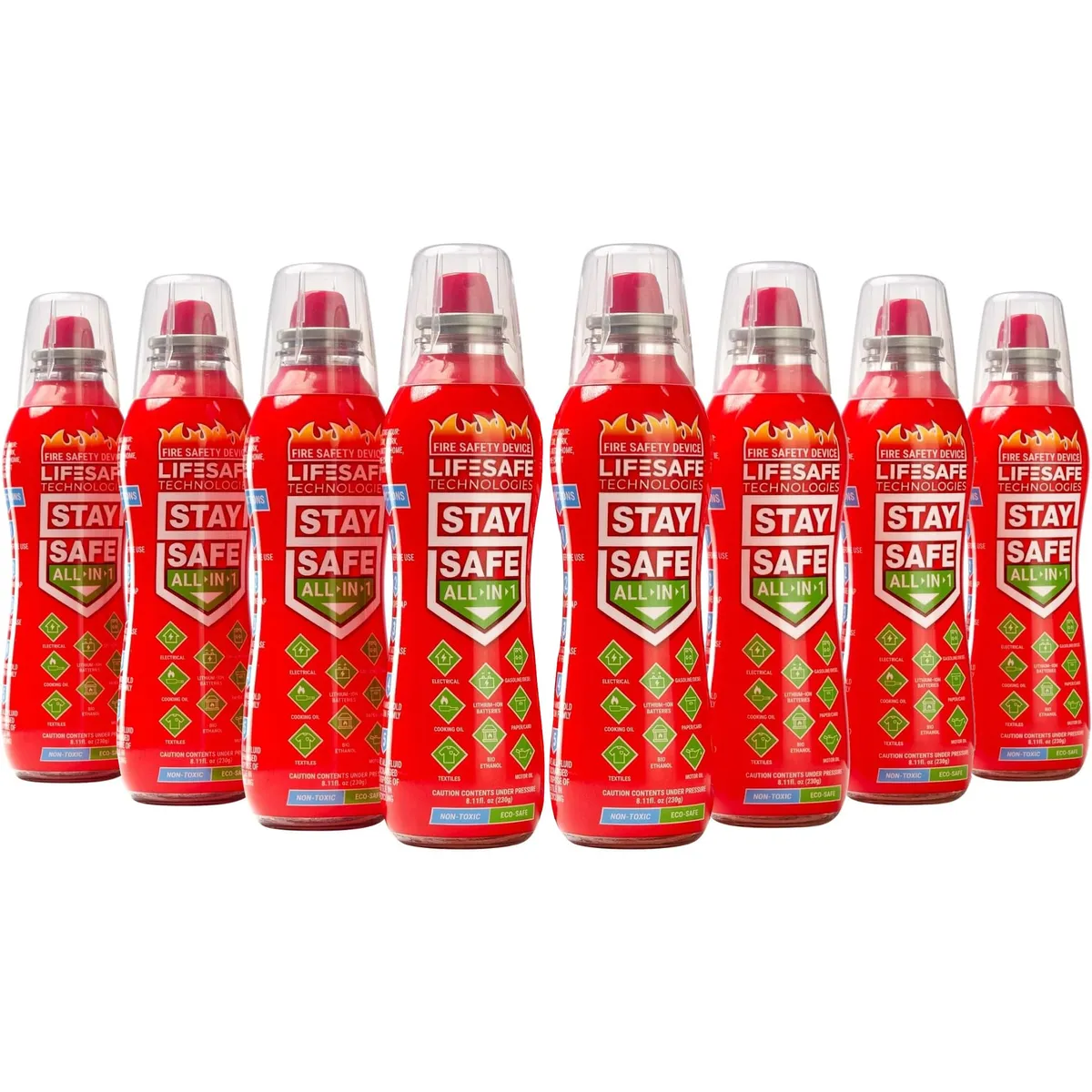
The best fire extinguisher for most boats is the LifeSafe StaySafe All-in-1. It handles fuel, electrical, grease, and lithium-ion fires in a sealed 9-oz aerosol that resists marine corrosion. It exceeds USCG B-I requirements and deploys one-handed \u2014 critical when you\u2019re also managing the helm.
We earn from qualifying purchases. Learn more
Why Boat Fires Are Uniquely Dangerous
The US Coast Guard reports over 600 boat fires per year, with fuel vapour ignition in enclosed bilges being the leading cause. Unlike a house or car fire, a boat fire gives you nowhere to run \u2014 you\u2019re surrounded by water, but water is the worst thing to put on a fuel or electrical fire.
Marine environments are also brutal on equipment. Salt spray corrodes metal valves and gauge mechanisms, temperature extremes stress O-rings and seals, and vibration from engines loosens mounting brackets. Many boat owners discover their fire extinguisher has failed only when they try to use it.
The ideal marine extinguisher needs to handle fuel vapour (Class B), electrical fires (Class C), galley grease (Class K/F), and increasingly lithium battery bank fires \u2014 all while resisting salt corrosion and fitting in a compact helm console or galley locker.
Marine Fire Extinguishers Compared
| Product | Size | USCG Rating | Fuel / Gas | Electrical | Salt Resistant | Score |
|---|---|---|---|---|---|---|
| LifeSafe StaySafe All-in-1 | 9 oz | Exceeds B-I | ✅ Yes | ✅ 1,000V | ✅ Sealed aluminium | 9.5/10 |
| LifeSafe StaySafe 5-in-1 | 16 oz | Exceeds B-I | ✅ Yes | ✅ 1,000V | ✅ Sealed | 8.5/10 |
| Kidde Pro 210 | 4 lbs | B-II | ✅ Yes | ✅ Yes | ⚠️ Chrome valve | 7.0/10 |
| Sea-Fire FG-Series | 2.5 lbs | B-I | ✅ Yes | ✅ Yes | ✅ Marine-rated | 7.5/10 |
| Amerex B500 | 5 lbs | B-II | ✅ Yes | ✅ Yes | ❌ Bare steel | 6.5/10 |
LifeSafe StaySafe All-in-1
LifeSafe StaySafe 5-in-1
Kidde Pro 210
Sea-Fire FG-Series
Amerex B500
Specs from manufacturer websites and USCG compliance data.
USCG Fire Extinguisher Requirements by Boat Size
| Boat Length | Minimum Required | Rating | Our Recommendation |
|---|---|---|---|
| Under 26 ft | 1 extinguisher | B-I (5-B:C) | 1–2 StaySafe All-in-1 units |
| 26–40 ft | 2 extinguishers | B-I or 1 B-II | 2–3 StaySafe units at key locations |
| 40–65 ft | 3 extinguishers | B-II minimum | 3–4 units, including engine room |
| 65+ ft | Per USCG inspection | B-II or fixed system | Fixed system + portable backup units |
Under 26 ft
26–40 ft
40–65 ft
65+ ft
Source: USCG 46 CFR \u00a725.30. Boats without enclosed compartments may be exempt.
Common Boat Fire Scenarios
Engine Compartment Fire
Fuel vapour accumulates in enclosed bilges. A single spark from a starter motor, alternator, or frayed wire can cause a flash fire or explosion.
Run the bilge blower for 4+ minutes before starting inboard engines.
Electrical / Battery Fire
Battery bank shorts, inverter failures, and corroded wiring are common marine electrical hazards. Lithium battery banks add thermal runaway risk.
Install a battery disconnect switch and check connections every season.
Galley Grease Fire
Cooking in a boat galley with the motion of waves makes grease spillage likely. A Class K/F-rated extinguisher is essential.
Never leave galley cooking unattended, especially under power.
What To Do If Your Boat Catches Fire
Sound the Alarm
Alert all passengers immediately. Assign someone to radio VHF Ch. 16 for a Mayday or Pan-Pan.
Position the Boat
Turn so the fire is downwind. This keeps flames and smoke blowing away from passengers.
Everyone In Life Jackets
Prepare to abandon ship. Get PFDs on before the situation worsens.
Shut Off Fuel & Electrical
If safe, shut down engines, close fuel valves, and disconnect battery banks.
Fight Small Fires Only
If contained to a galley, appliance, or small compartment, deploy your extinguisher from a safe position. Never open an engine compartment lid — the oxygen surge will cause a flashover.
Frequently Asked Questions
Every Boat Needs A StaySafe All-in-1
Fuel vapour, galley grease, electrical shorts, lithium batteries \u2014 all handled in a 9-oz sealed unit that won\u2019t corrode at sea. Exceeds USCG B-I requirements. Mount one at the helm, one in the galley.