Best Fire Extinguisher for RV & Campervan (2026)
Propane leaks, shore-power shorts, lithium house batteries, cooking fires in a confined galley. An RV is a house fire on wheels \u2014 and you can\u2019t just walk out the front door.
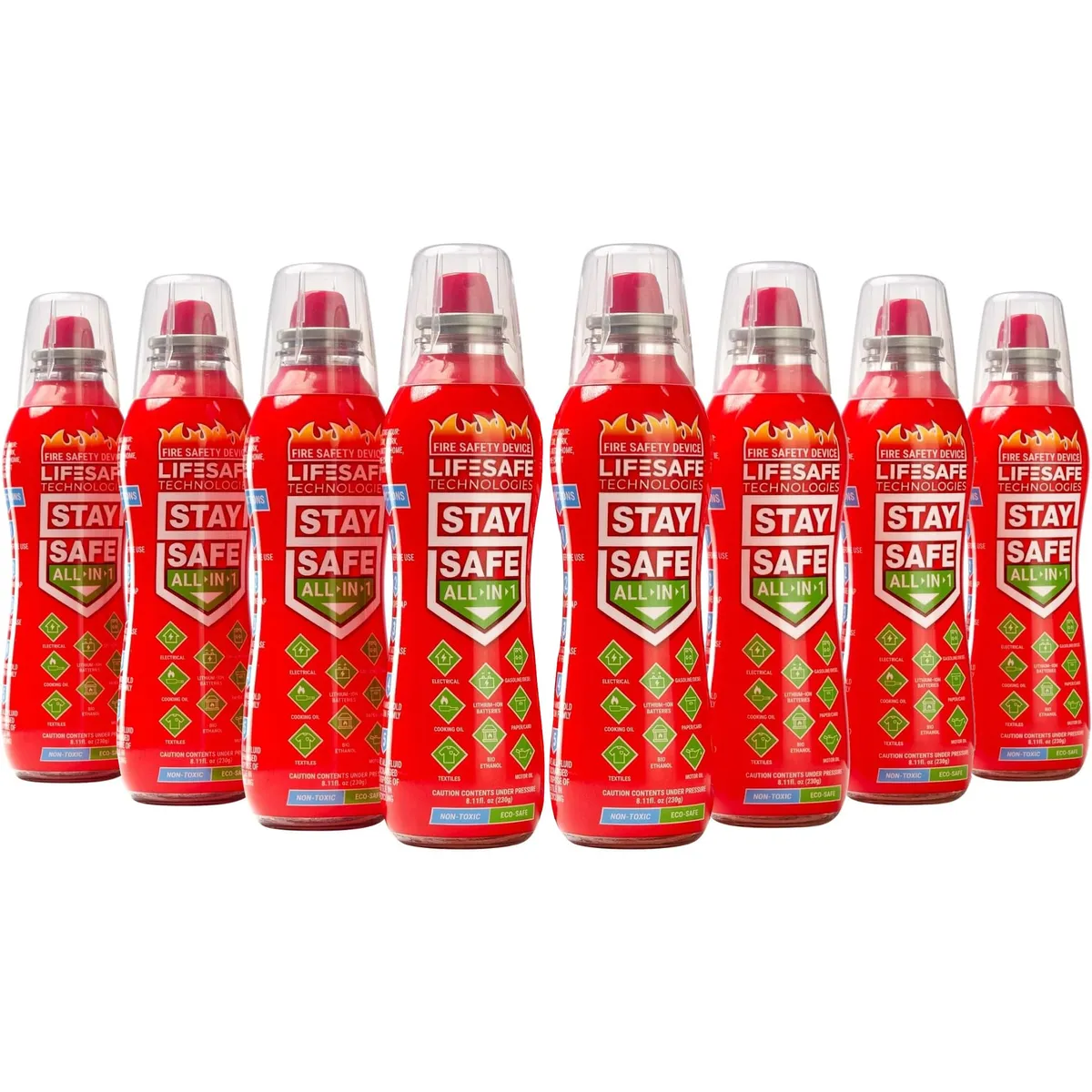
The best fire extinguisher for an RV is the LifeSafe StaySafe All-in-1. At 9 oz it handles propane, electrical, grease, lithium-ion, and fabric fires \u2014 every fire type an RV faces \u2014 without toxic residue in a confined living space. Mount one by the door, one by the galley.
We earn from qualifying purchases. Learn more
Why RVs Face Unique Fire Risks
An RV combines every residential fire hazard into a vehicle that vibrates, overheats, and packs propane lines within inches of electrical wiring. The NFPA reports that US fire departments respond to an estimated 2,100 RV fires per year. Propane system leaks, 12V/120V electrical shorts, cooking mishaps, and now lithium house battery thermal runaway make the average RV a five-alarm risk profile in a 300-square-foot box.
Traditional ABC dry-chemical extinguishers are the default RV choice \u2014 but they create a massive cleanup problem in a confined space, the powder corrodes electronics, and the pin-and-lever mechanism is difficult to operate in a panic. Worse, most aren\u2019t rated for lithium-ion battery fires, which are increasingly common as RV owners upgrade to lithium house battery banks.
The ideal RV extinguisher needs to cover propane (Class B), electrical (Class C), cooking grease (Class K/F), fabric (Class A), and lithium-ion \u2014 all without leaving toxic residue in a space where you sleep, eat, and breathe.
RV Fire Extinguishers Compared
| Product | Size | Propane / Gas | Electrical | Lithium-Ion | Residue | Score |
|---|---|---|---|---|---|---|
| LifeSafe StaySafe All-in-1 | 9 oz | ✅ Yes | ✅ 1,000V | ✅ Yes | None | 9.5/10 |
| LifeSafe StaySafe 5-in-1 | 16 oz | ✅ Yes | ✅ 1,000V | ✅ Yes | None | 8.5/10 |
| Kidde Pro 210 | 4 lbs | ✅ Yes | ✅ Yes | ❌ No | Heavy powder | 7.0/10 |
| First Alert HOME1 | 2.5 lbs | ✅ Yes | ✅ Yes | ❌ No | Moderate powder | 6.0/10 |
| Generic ABC Dry Chemical | Varies | ✅ Yes | ✅ Yes | ❌ No | Heavy powder | 4.0/10 |
LifeSafe StaySafe All-in-1
LifeSafe StaySafe 5-in-1
Kidde Pro 210
First Alert HOME1
Generic ABC Dry Chemical
Specs from manufacturer websites. Scores are editorial assessments.
Common RV Fire Scenarios
Propane Leak Ignition
Loose fittings, cracked lines, or a stove left on. Propane sinks to the floor and can ignite from a pilot light, spark, or even static electricity.
Install a propane/CO detector at floor level near the galley.
Electrical Short
Shore power connections, inverter wiring, and 12V systems vibrate loose over thousands of road miles. A short behind a wall panel can smoulder for hours before flames appear.
Check all wire connections annually and after long trips.
Lithium Battery Thermal Runaway
Lithium house batteries can enter thermal runaway from physical damage, a failed BMS, or extreme heat. Traditional extinguishers cannot stop this.
Only use extinguishers explicitly rated for lithium-ion fires.
Galley Cooking Fire
Grease fires in a tiny RV kitchen spread to curtains and cabinetry in seconds. Water makes grease fires worse — you need a Class K/F-rated unit.
Keep your extinguisher within arm’s reach of the stove, not behind it.
Where To Mount Extinguishers In Your RV
✅ BEST PLACEMENTS
- By the main entry door (arm’s reach)
- Near the galley/kitchen area
- Bedroom area (rear bedroom rigs)
- Tow vehicle cab (for trailer owners)
❌ AVOID
- Inside closed overhead cabinets
- Behind the driver’s seat (blocked by slide)
- Outside storage bays (can’t access during fire)
- Near heat sources (furnace, water heater)
🚻 RV-SPECIFIC TIPS
- Use RV-rated mounting brackets (vibration resistant)
- Check mounting after every trip
- Keep one accessible with slides retracted
- Label locations clearly for all passengers
What To Do If Your RV Catches Fire
Alert Everyone Inside
Yell "Fire!" and wake all occupants. In an RV, seconds matter more than in a house.
Evacuate Via Nearest Exit
Use the main door or emergency window. Don’t stop for belongings. Account for every person and pet.
Shut Off Propane (If Safe)
If you can reach the exterior propane shutoff valve without approaching the fire, turn it off.
Call 911 / Emergency Services
Provide your exact location, especially in campgrounds or remote areas.
Small Fire Only: Extinguish
If the fire is contained to a stove top, appliance, or small area, deploy your extinguisher from the doorway. If in doubt, get out and stay out.
Frequently Asked Questions
Every RV Needs Two StaySafe All-in-1 Units
One by the door, one by the galley. Propane, electrical, grease, lithium \u2014 every fire type your RV can throw at you, handled in 9 ounces with zero toxic residue in your living space.