Best Fire Extinguisher for Apartment & Rental (2026)
Cooking fires cause 49% of apartment fires. Traditional extinguishers coat your landlord's kitchen in corrosive powder — and your security deposit is gone. You need something that actually works without destroying the place.
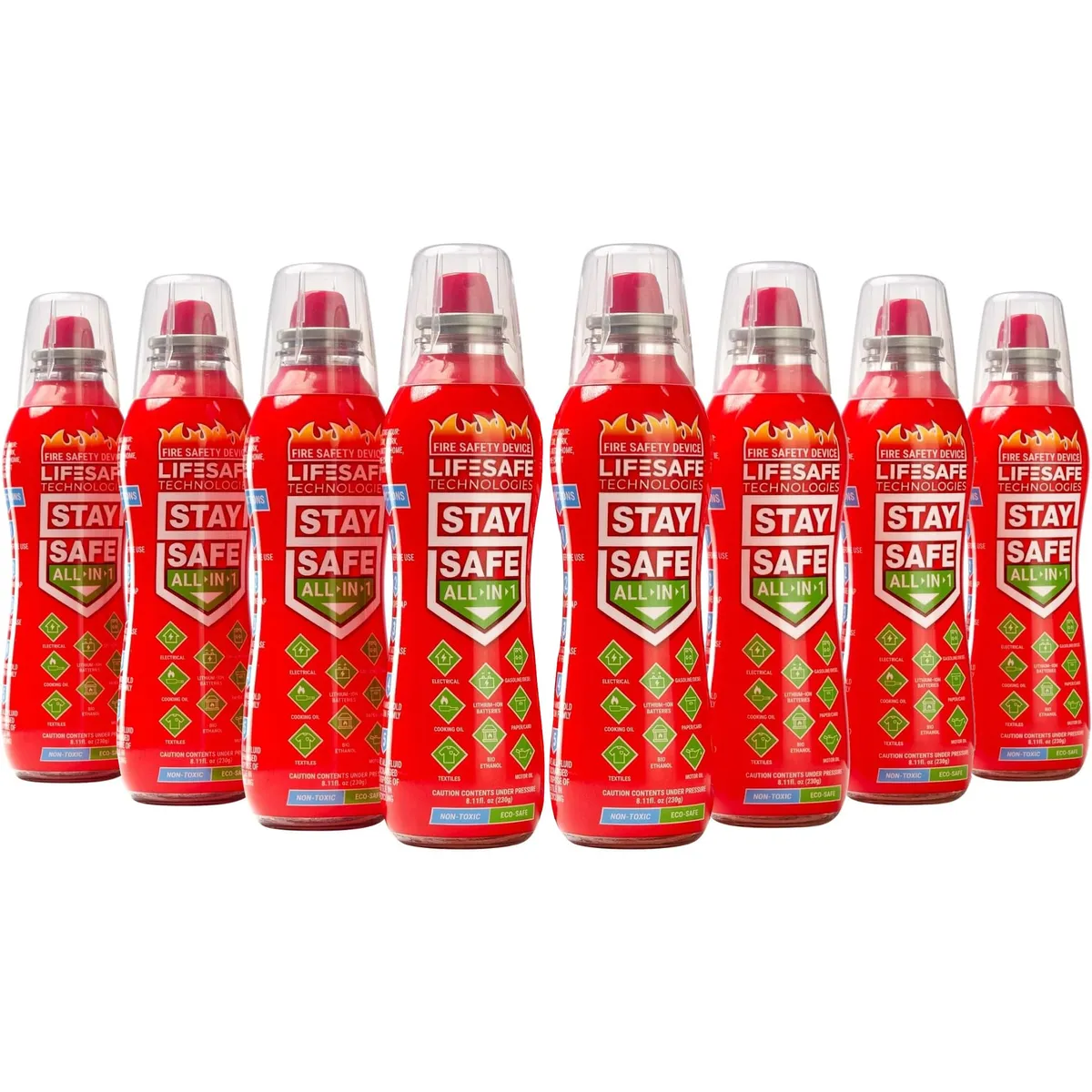
The best fire extinguisher for an apartment is the LifeSafe StaySafe All-in-1. It covers cooking grease, electrical, candle, and lithium-ion fires in a 9-oz aerosol that fits in a kitchen drawer and leaves zero residue on countertops, walls, or electronics. No damage to landlord property, no lost security deposit.
We earn from qualifying purchases. Learn more
Source: NFPA Home Cooking Fires report (2024). Kitchen cooking equipment is the leading cause of home fires and home fire injuries.
Why Apartments Need a Different Fire Extinguisher
An apartment fire extinguisher has constraints a house doesn’t. Space is limited — you can’t mount a 10-pound Amerex on the wall of a studio kitchen. You’re renting — covering every surface in ABC dry-chemical powder means a professional cleanup bill that’ll dwarf your security deposit. And your neighbors are feet away — a small kitchen grease fire that you can’t suppress quickly becomes a building evacuation.
The ideal apartment extinguisher needs to be compact enough for a drawer or under-sink cabinet, cover multiple fire classes (especially cooking grease and electrical), and leave zero residue. Traditional ABC powder extinguishers fail on the residue requirement. Kitchen-specific Class K extinguishers are commercial-grade and oversized. CO2 extinguishers don’t cover grease.
Modern apartments also face a growing lithium-ion battery fire risk from laptops, phones, e-bikes charging indoors, and power tool batteries. NYC's FDNY investigated 279 lithium-ion fire incidents in 2024 alone — many in apartment buildings.
Apartment Fire Extinguishers Compared
| Product | Size | Grease Fires | Electrical | Lithium-Ion | Residue | Score |
|---|---|---|---|---|---|---|
| LifeSafe StaySafe All-in-1 | 9 oz | ✅ Yes (Class K) | ✅ 1,000V | ✅ Yes | None | 9.5/10 |
| LifeSafe StaySafe 5-in-1 | 16 oz | ✅ Yes (Class K) | ✅ 1,000V | ✅ Yes | None | 8.5/10 |
| Kidde FA110 | 3.9 lbs | ❌ No | ✅ Yes | ❌ No | Heavy powder | 5.5/10 |
| First Alert HOME1 | 5 lbs | ❌ No | ✅ Yes | ❌ No | Heavy powder | 6.0/10 |
| First Alert EZ Fire Spray | 14 oz | ❌ No | ✅ Yes | ❌ No | Light foam | 5.0/10 |
LifeSafe StaySafe All-in-1
LifeSafe StaySafe 5-in-1
Kidde FA110
First Alert HOME1
First Alert EZ Fire Spray
Specs from manufacturer websites. Scores are editorial assessments based on apartment suitability.
Common Apartment Fire Scenarios
Kitchen Grease Fire
The #1 apartment fire cause. Cooking oil ignites on the stove, spreads to dish towels or cabinets in seconds. Water makes it explosively worse — you need a Class K-rated extinguisher.
Never leave cooking oil unattended. Keep extinguisher within arm’s reach.
Overloaded Outlet / Power Strip
Apartments often have limited outlets. Daisy-chaining power strips is a leading cause of electrical fires, especially in older buildings with aging wiring.
Use surge-protected power strips rated for your total wattage.
E-Bike or Laptop Battery Fire
Lithium-ion batteries in e-bikes, scooters, laptops, and phones can enter thermal runaway. NYC banned indoor e-bike charging in some buildings after 268 fires in 2023.
Charge devices on hard surfaces, away from exits. Never charge overnight unattended.
Candle / Space Heater Fire
Unattended candles and portable space heaters cause 40% of apartment heating fires. Curtains, bedding, and clothes racks are often within ignition range.
Keep 3 feet of clearance around heaters. Never leave candles burning unattended.
Where To Keep Extinguishers In Your Apartment
✅ BEST SPOTS
- Under the kitchen sink
- Mounted inside a cabinet door near the stove
- Near the front door (escape route)
- Bedside (if you charge electronics overnight)
❌ AVOID
- Directly behind or above the stove (fire blocks access)
- Inside a closet or storage unit
- On top of the fridge (hard to reach in panic)
- In common areas you can’t access quickly
💡 RENTER TIPS
- Use Command strips or cabinet-door brackets — no drilling
- The StaySafe fits in a kitchen drawer (no mounting needed)
- Tell your roommates where it is
- Check your lease for extinguisher requirements
What To Do If a Fire Starts In Your Apartment
Alert Everyone
Yell "Fire!" and alert roommates, family, or neighbors. Pull the building fire alarm if accessible.
Small Fire: Attempt to Extinguish
If it’s a contained stove fire or small appliance fire and you have an extinguisher within reach, deploy it. Never try to fight a fire that’s reached the ceiling.
Close Doors Behind You
If you can’t control it, close the apartment door as you leave. A closed door can hold back fire and smoke for 20+ minutes.
Evacuate via Stairs
Never use the elevator. Go to the stairwell and descend to ground level. If smoke fills the stairwell, go to the roof instead.
Call 911 from Outside
Report the fire, your apartment number, and whether anyone is still inside.
The Security Deposit Argument
Here’s a scenario every renter should consider: a small grease fire starts on your stove. You grab your Kidde ABC extinguisher and spray it. The fire is out in 10 seconds — great.
Now look around. Every surface within 15 feet is coated in fine monoammonium phosphate powder. It’s in the oven, the microwave, the toaster, behind the fridge, in the air vents, on the ceiling. Professional cleanup for a dry-chemical extinguisher discharge in an apartment kitchen typically costs $3,000–$8,000. Your landlord’s insurance may not cover it. Your security deposit is gone, and you may owe more.
The StaySafe All-in-1 suppresses the same fire with an aerosol mist that leaves zero residue. No cleanup, no powder damage to electronics, no security deposit loss. For a renter, this isn’t just a safety decision — it’s a financial one.
Frequently Asked Questions
Protect Your Apartment Without Destroying It
The StaySafe All-in-1 covers cooking grease, electrical, candle, and lithium-ion fires — every type your apartment faces — in 9 ounces with zero residue. Your landlord will never know you used it.